
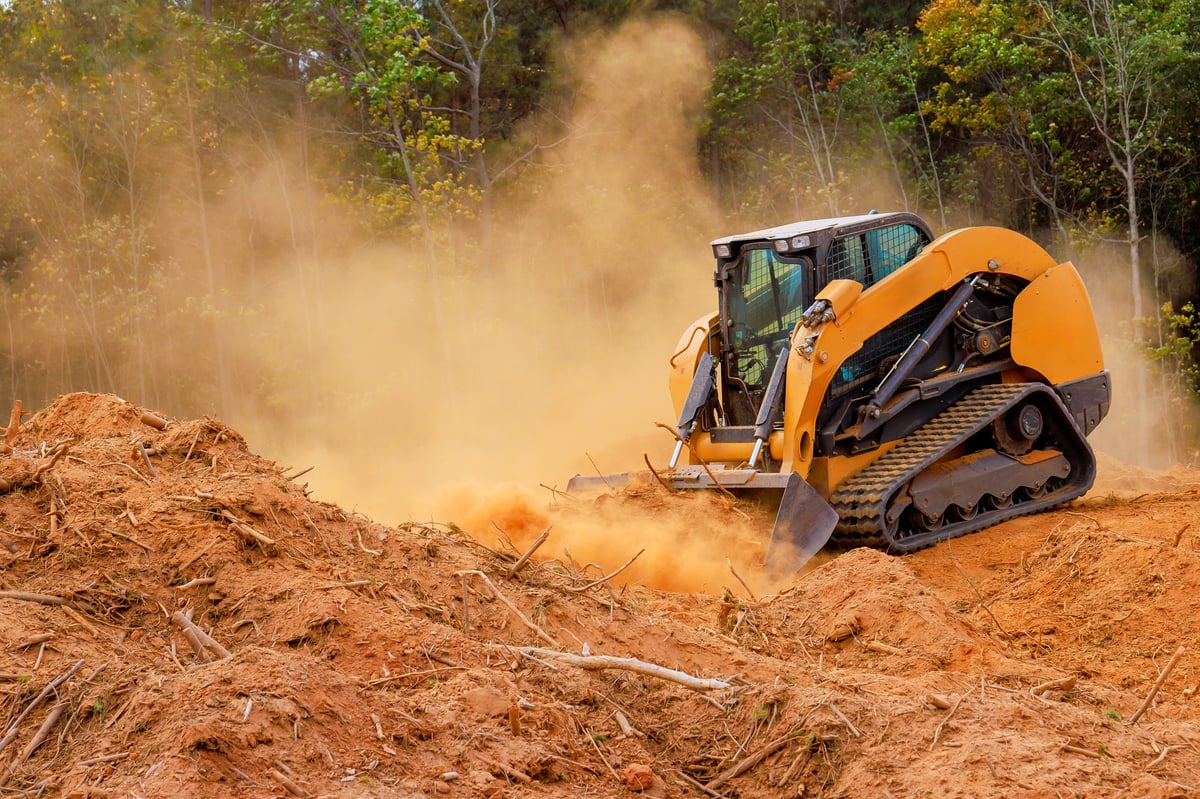
Some machines live in places that eat tires: demolition sites, scrap yards, recycling plants, landfills, rock quarries, and construction sites where rebar and nails are part of the ground. A flat on a telehandler at 7:00 AM doesn't just cost a tire, it costs the crew that's standing around waiting. Foam fill is the fix for that, and it's worth knowing what it does, what it doesn't do, and which equipment it's right for.
What foam fill is
A foam-filled tire is a standard pneumatic (air) tire that has been pumped full of a liquid polyurethane compound through the valve stem. The compound cures into a solid, flexible core with no air in it. Nothing can puncture it into going flat, because there's no air to lose. The tire keeps its normal footprint and most of its normal ride, which is why foam fill is often chosen over a solid tire for equipment that still needs some cushion.
Equipment that benefits
- Skid steers and compact track loader support machines working demolition, concrete, and site prep.
- Telehandlers and rough-terrain forklifts on construction sites.
- Backhoes and wheel loaders in scrap, recycling, and transfer-station work.
- Rough-terrain and outdoor forklifts in yards with debris. (Indoor warehouse forklifts usually run solid press-on or resilient tires instead; CMC Tire has on-site press capabilities for those, with same-day service on most jobs.)
- Scissor lifts, sweepers, and tow tractors where a flat means a stranded machine.
- Mining support equipment that works around sharp rock and dropped material.
What you give up
Foam fill is a trade, and it's worth going in with eyes open.
- Weight. A foam-filled tire is heavier than an air-filled one. That can affect machine balance and rated lift capacity, so check the equipment manufacturer's guidance before filling, especially on lifts and telehandlers.
- Ride. The ride is firmer than air. Operators notice it on rough ground.
- No pressure adjustment. You can't air down for soft ground or air up for a heavy load. The fill pressure is set once, at filling.
- Not for road use. Foam-filled tires are for low-speed equipment. They are not for highway trucks or anything that runs at road speeds for long stretches.
- End of life. When the tread is gone, the tire is done. It can't be retreaded, and the foam adds weight at disposal.
If a machine runs mostly on clean pavement or indoors, foam fill usually isn't worth it. If it works in debris and a flat shuts the job down, it usually is.
How CMC Tire does it
CMC Tire foam fills tires at our shops and on-site with our mobile service trucks, so a machine that can't easily leave the job doesn't have to. We'll help you pick the right tire for the application first, since the right carcass and tread pattern matter as much as the fill. For warehouse and industrial equipment, we handle solid and pneumatic tires, industrial flat repair, equipment tire replacement, and press-on, resilient solid, and cushion tires with our on-site press.
Three questions we get a lot
Can you fill the tires that are already on the machine? Usually, yes, if the tires are in good shape and the right type for filling. Worn or damaged tires should be replaced first, because once a tire is filled you're committed to it for the rest of its tread life.
Does it have to be all four? Not always, but mixing filled and air tires on the same axle changes how the machine sits and handles. We'll fill in matched pairs at minimum, and most customers do the whole machine.
How long does it take? The fill itself is quick; the cure time before the machine goes back to work is what you plan around. We'll give you the schedule for your tire size when you book.
Have a machine that keeps going down with flats? Schedule service or request a quote for foam fill, and pick the location closest to the job. Our Services page covers construction, industrial, and mining tire work in more detail.